Bin There, Done That: A Field Guide to Your Street's Rubbish Rituals
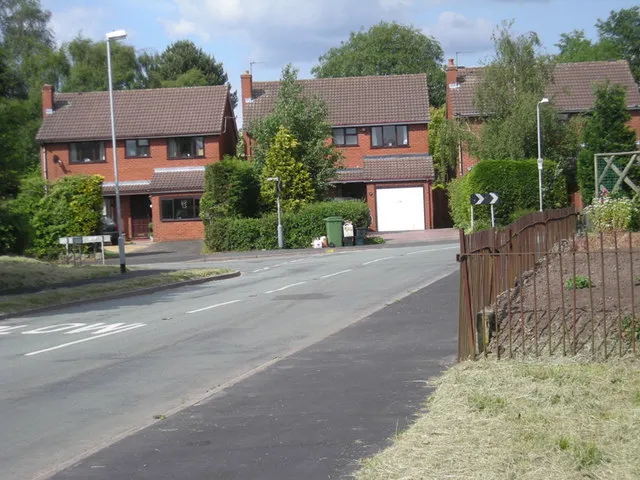
Photo: Row17, CC BY-SA 2.0, via Wikimedia Commons
There is a moment, somewhere between the third cup of tea and the evening news, when a street collectively remembers. Curtains twitch. A gate clicks. Somewhere a wheel squeaks across gravel, and the whole road quietly performs its oldest ritual: putting the bin out.
We don't talk about it much, this weekly choreography. But spend a fortnight on any British street and you'll notice the patterns are as fixed as tide tables. Here's our entirely unofficial guide to reading them.
First, the calendar is not a calendar
Council collection schedules in 2026 are a beautiful mess of apps, PDFs, text alerts and laminated cards stuck to the fridge with a magnet from a garage in 2011. Most authorities now nudge you by email the day before, which is helpful right up until the week you ignore the email and rely on instinct.
Instinct, it turns out, is wrong roughly four times a year. Bank holidays shuffle everything. So do roadworks, storms and the mysterious week in January when nobody is quite sure whether it's recycling or garden waste. If you've recently moved, find your council's bin page, note the collection day, then note the actual collection day after the first bank holiday, because they will not be the same.
One useful rule: if two neighbours have already wheeled theirs out and a third is standing at their window looking thoughtful, the correct answer is usually yes.
The seven bin types of the British street
Ask around and you'll find most roads are a mixture of a few recognisable characters.
The Night-Before-er. Bin out at 6.45pm, lid down, handle facing the road. They will tell you it's because they leave for work at dawn. It is really because they like being first.
The Dawn Raider. Out at 6.10am in a dressing gown, barefoot in November, radiating quiet heroism. They believe the Night-Before-ers are showing off.
The Optimist. Puts out an almost-empty bin and a recycling box containing one yoghurt pot and a sense of hope. Genuinely believes the crew will be impressed.
The Hoarder. Skips a fortnight, then emerges with four bags, a broken chair and an apologetic shrug. Their bin day is less a collection and more a small evacuation.
The Lid Diplomat. Has mastered the art of placing the bin at the exact angle that stops it blowing over. Will reposition yours without being asked. Never mentions it.
The Phantom. You have never seen them. Their bin appears and disappears with the smoothness of a stage trick. Nobody knows their name.
The Rogue. Puts the bin out on the wrong day, every time, and leaves it there for 72 hours as a kind of public art.
The unspoken etiquette, decoded
Nobody teaches you this. You absorb it, like damp.
- Retrieve the runaway lid. If a lid escapes down the street, whoever finds it first returns it. No note required. Placing it neatly against the correct bin is the whole message.
- Do not touch a bin that isn't yours unless it has fallen over, is blocking a driveway, or has been sitting out for three days, in which case a gentle wheel-in is considered a kindness.
- Bag it before you bin it only applies to things that drip. Everyone has opinions about this. Nobody enforces it.
- The Christmas tree is the one day of the year when all rules are suspended and the pavement looks like a forest fire.
- Never comment on a neighbour's recycling. What's in there is between them, their conscience and the sorting facility.
- If a crew member waves, wave back. This is the closest most of us get to a civic ceremony.
Small superstitions, sincerely held
Bin day breeds folklore. Some people swear the lorry arrives earlier in the rain. Others believe turning the bin handle towards the house brings bad luck, or that putting it out before the birds are up guarantees a missed collection. One household we heard about leaves a note for the crew at Christmas, which is either deeply charming or a subtle attempt at priority service. Possibly both.
The most widespread belief, though, is the phantom knock — the conviction that you heard the lorry at 7.05am when in fact it is the milk float, a van, or the wind. This causes more half-dressed pavement appearances than any other phenomenon in Britain.
A short, unscientific quiz
Answer honestly.
- Your bin goes out: (a) the night before (b) at dawn (c) when you hear next door's gate.
- You own: (a) one bin and a spreadsheet (b) four bins and no idea (c) a bin bag and a dream.
- A neighbour's recycling blows into your garden. You: (a) return it sorted (b) return it vaguely (c) consider it now yours.
- The collection is missed. Your first move: (a) check the council website (b) check the app (c) blame the weather.
Mostly (a): your street is a Night-Before street. Calm, punctual, mildly smug. Mostly (b): a Dawn street. Efficient, slightly chaotic, deeply likeable. Mostly (c): a Free-Range street. The bins are out, the rules are loose, the community is strong.
Notes for newcomers
If you've just moved in, three things will save you. Find out which bin is which before you fill them. Learn your collection day, then double-check it against the bank holiday list. And introduce yourself to whichever neighbour is always outside on bin night — they are the street's unofficial archivist and will happily explain everything, including the thing about the lid.
Oh, and one last thing. The bin lorry comes at a different time every week, and everyone on your street knows this, and everyone still says "they're early today." Welcome. You'll be saying it by February.