Courgette Currency: A Field Guide to Britain’s Self-Service Roadside Stalls
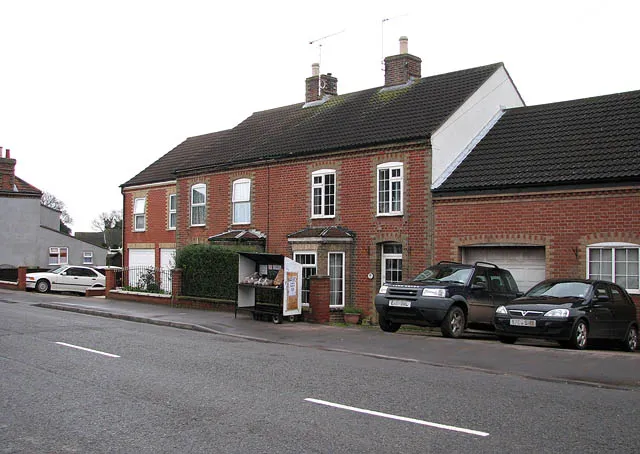
Photo: Evelyn Simak, CC BY-SA 2.0, via Wikimedia Commons
There is a particular kind of British shop that has no door, no till and no closing-time announcement. It is a table at the end of a lane, a plastic box under a hedge, or a tray balanced on two milk crates. On it: courgettes, a few jars of jam, maybe some eggs, and a hand-written sign that says something like “50p each — money in the jar, thank you.”
In November 2026, with the light going soft by half four and the hedgerows looking distinctly damp, these little roadside stalls are still doing business. They are not really shops and they are not quite gifts. They are small, self-service experiments in trust, and they tell you quite a lot about how Britain works when nobody is watching.
The table at the gate
The one I stopped at last week was a classic of the genre. A folding table, a strip of cling film, a pile of courgettes the size of small marrows, and a coffee jar with a slot cut in the lid. The sign was laminated, which felt optimistic, and weighted down with a brick, which felt sensible. There was no card reader, no QR code, and no member of staff. Just vegetables, a jar, and the unspoken assumption that most people will do the decent thing.
What strikes you first is how ordinary it all is. Nobody is standing guard. Nobody is asking you to scan a loyalty card. The stall is there because someone had too many courgettes and not enough neighbours who wanted another one. The jar is there because taking money off a table is awkward, but leaving it is not.
What the jar is really counting
On paper, the honesty box is a terrible business model. It relies on customers to price their own shopping, make their own change and resist the urge to pocket the float. In practice, it works often enough to keep going, which is either a quiet vote for human nature or a sign that most people are too embarrassed to shortchange a courgette.
The pricing is part of the charm. You will see 50p, 80p, £1, “3 for £2”, and occasionally a beautifully vague “pay what you think”. The British relationship with exact change does the rest. We are a nation that will rummage through a coat pocket for 20p rather than leave a £2 coin for a 90p bag of apples. We will also spend four minutes deciding whether a 10p overpayment is generous or showy. The jar accepts both.
Some stalls now have a QR code for bank transfers, which is practical but slightly defeats the romance. The jam jar remains the gold standard: visible, weatherproof-ish, and satisfying to drop a coin into. If you are shopping at one, bring coins. A £20 note in a jam jar is not helpful. It is a hostage situation.
The unwritten etiquette
Shopping at a roadside stall is not complicated, but it does have rules. Take what you need, leave the right money, and close the lid properly. Do not rearrange the display as if you are merchandising a supermarket end-of-aisle. Do not help yourself to the “free” box unless it actually says free. And if the sign says “honesty box”, do not treat it as a suggestion.
For sellers, the etiquette runs the other way too. Make the price clear. Make the jar secure. Make sure the table will not blow over in the first gust of November. A good stall is legible from a moving car: you should be able to see what it is, what it costs and where the money goes before you have to brake.
It also helps to keep expectations low. An honesty box is not a pension plan. It is a way to move a glut of produce, share a few jars of jam and have a mildly optimistic relationship with the passing public. If you get most of your money back, that is a good day.
A practical guide to setting one up
If you have a courgette mountain, an apple tree doing its annual overachievement or a cupboard full of chutney, a small roadside stall can be a reasonable solution. Start small: a sturdy table, a clear sign, a price list and a lidded jar. Put it somewhere visible but safe — not on a blind bend, not on a fast road, and not anywhere a driver would have to make a sudden decision.
Price in round coins if you can. 50p and £1 are easier than 73p. Keep the stock modest and check it daily. Bring the jar in overnight, especially if rain is forecast. And write “thank you” on the sign; it sounds small, but it sets the tone.
For shoppers, the drill is equally simple. Bring change, take only what you will actually use, and leave the jar as you found it. If you are short by 10p, leave a note or overpay next time. If you are over by 10p, consider it a contribution to the ongoing experiment. Either way, do not stand there trying to make exact change from a jar that already contains 37 five-pence pieces and a mysterious washer.
What it says about us
The honesty box is a tiny civic institution. It works because most people are broadly decent, because the amounts are small enough to make dishonesty feel silly, and because there is something deeply British about a system held together by cling film, a laminated sign and the fear of being judged by a neighbour you have never met.
It is also a reminder that not every transaction needs an app. Sometimes the whole infrastructure is a table, a jar and a courgette. And sometimes that is enough.