A Seat With a Past: Nine Pavement Perches That Punch Above Their Weight
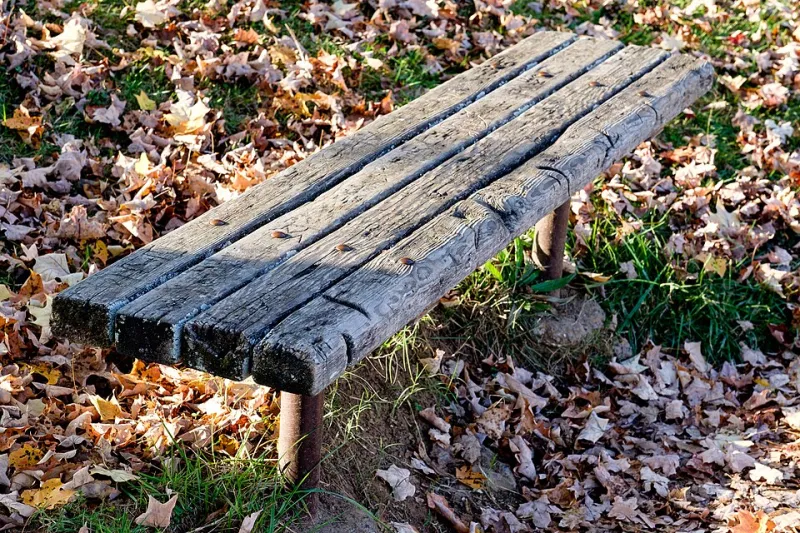
Photo: David Ratledge, CC BY 4.0, via Wikimedia Commons
A bench is the cheapest tourist attraction in Britain. No ticket, no queue, no gift shop. You get a seat, a view, and — if you're lucky — a small brass plate with a story on it that somebody's family thought was worth the money.
We've spent a damp autumn reading plaques and bothering strangers about their favourite perches. Here's what we found, and how you can do the same before the drizzle properly settles in.
Why benches are secretly the best part of public life
Look at what people actually write on a bench plaque. Not dates and job titles, mostly. It's "loved this view and hated the seagulls." "Sat here every lunchtime for 31 years." "Still waiting for the bus." There's an unguardedness about them you don't get on a statue. A statue says: remember this person. A bench says: this person liked sitting here, and so might you.
They're also useful in the plainest sense. Free rest stops, rain shelters for the under-prepared, al fresco offices, and the only place in town where a stranger can sit next to you without anyone thinking it's odd.
Nine to look out for
1. The viewpoint bench. Every hill worth climbing has one at the top, and it is nearly always occupied by someone eating a sandwich with the quiet satisfaction of a person who has earned it. The plaque, if there is one, usually names a walker who did the climb hundreds of times. Sit, catch your breath, agree with them.
2. The seafront memorial. Promenade benches are the great archive of British coastal life — birthdays, anniversaries, and the occasional blunt instruction not to feed the gulls. You will find the best ones a little weathered, facing the sea, angled slightly away from the wind. Take the hint and sit the same way.
3. The bus-stop bench with a legend. Somewhere near you is a bench with a plaque that makes no sense to anyone outside a half-mile radius. A nickname. A joke. A reference to a dog. This is the gold standard of local bench: entirely unexplained, fiercely defended.
4. The bench built for two — badly. Look for a plaque mentioning a couple, on a seat that is clearly only comfortable for one. There is something oddly moving about a bench that assumes people will keep each other company.
5. The bench facing nothing. No view, no road, no reason. Just a bench, in a patch of grass behind a car park. The plaque will say something like "he liked the quiet." He was right.
6. The town-centre people-watching perch. The busiest, most scratched, most graffiti-tagged bench in town, and therefore the most honest one. Sit for ten minutes and you'll see the whole place go past: school runs, arguments, someone carrying a mattress.
7. The garden bench with a story attached. Village greens and churchyards are full of them, usually donated by a family after a long local life. These are often the oldest and the least visited, and they're where you'll find the best inscriptions.
8. The memorial-with-a-compromise. The bench built to remember a keen fisherman on a spot where there is no fishing, because the river moved, or the access closed, or the council said no. Poignant, dryly funny, and very British.
9. The bench somebody keeps fixing. Look for fresh slats, a newer coat of paint, a spanner-shaped absence of vandalism. Somebody local is quietly maintaining it. That bench is loved more than any official marker.
A note for the cautious: plaques get misremembered, details shift, and half of what locals tell you is a legend rather than a record. That's not a flaw. That's the whole appeal. Treat every story as a story.
How to read a bench properly
- Walk round it. The plaque is often on the backrest, facing away from the view. Counter-intuitive, occasionally brilliant.
- Look underneath. Old benches were stamped by the maker. Some have been re-slatted so many times they're basically Theseus' bench.
- Check the arms. Years of hands do strange things to wood. If one arm is worn smooth and the other isn't, you know which side people sit.
- Read the date, then do the maths. A plaque from the 1950s on a bench that clearly isn't that old tells you something: either the bench was rebuilt or the plaque was rescued. Worth asking about.
Practical notes for a November bench crawl
Take a cloth or a plastic bag to sit on — damp soaks through faster than you think. Wear something that copes with a surprise shower. Keep the walk short and the ambitions low; two benches and a flask beats a ten-mile mission. And if it's blowing a proper gale, remember that the leeward side of a shelter, a bandstand or a good wall does half the work of a bench anyway.
Do also sit, rather than just photographing the plaque and leaving. The bench is doing a job. Let it.
Nominate your own
Got a bench near you with a puzzling plaque, a stubborn local legend, or a view that justifies the walk? We want to hear about it. The best nominations tend to be small and unexplained: a name, a date, and forty years of people sitting there anyway.
If your local park has a bench committee, a friends group or a slightly obsessive volunteer with a pot of wood stain, that's your source. Ask them. They'll talk for an hour, and it'll be the best hour of your week.