Brick, Bleach and the Beautiful Bodge: A Field Guide to Britain’s Door-Holding Habits
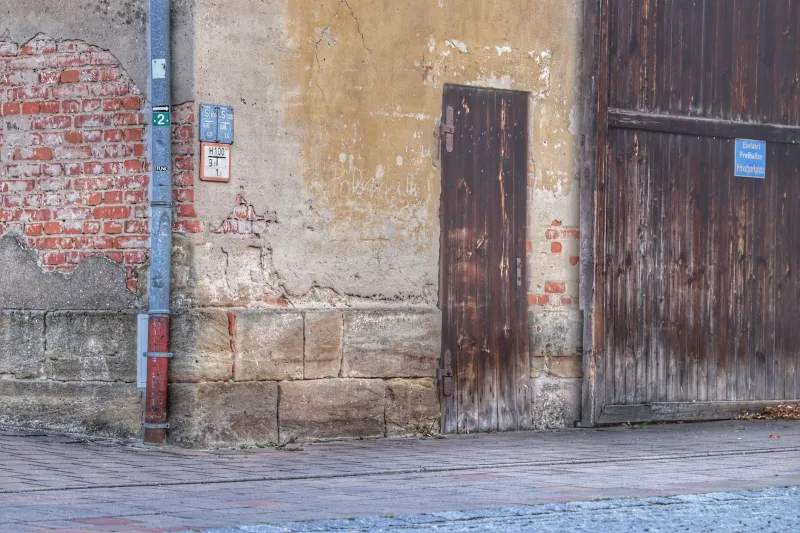
The back door has been propped open with a half-brick for three weeks. Nobody decided this. The brick simply arrived, possibly from the garden wall that came down in 2019, and now it lives by the step like a small, heavy pet. In November, when the wind comes down the alley and the letterbox starts its annual impression of a kazoo, the doorstop stops being a bit of clutter and becomes infrastructure.
Britain has a long and quietly ridiculous relationship with the improvised door-holder. We buy proper wedges, then lose them under the radiator. We inherit brass doorstops shaped like foxes and use them to hold open a door that already has a hook. And in the gap between intention and reality, a folk archive accumulates: bricks, bottles, dumbbells, paint tins. This is not a ranking of taste. It is a field guide to what we grab when the door will not stay put.
The painted brick: the people’s champion
A brick with a coat of gloss paint is the closest thing this country has to a universal doorstop. It is heavy enough to resist a gust, low enough to miss the postman’s toe if he is lucky, and ugly enough to be left outside without fear. The paint is usually leftover from a skirting board, which means the brick is not just a tool but a colour chart of previous DIY. It says: I am practical, I own a brush, and I have never thrown away a useful lump of anything.
In a November draught, the painted brick performs well. It does not slide on concrete. It does not care about rain. Its weakness is the human foot, and the way it waits until you are carrying a full washing basket before reminding you of this.
The retired dumbbell: aspiration with a handle
A 1.5kg neoprene dumbbell by the kitchen door is a small monument to a January that did not last. It holds the door open with a certain smugness. It is easy to move, has a built-in handle, and makes a satisfying thud on tile. On carpet, it can roll; on lino, it can roll further. But it works, and it reminds you that you once had a plan involving exercise and a podcast.
What it says about the household: optimistic, slightly guilty, and not quite ready to put the dumbbell in a cupboard. It is a doorstop with a backstory.
The classic rubber wedge: the only professional in the room
Every so often, someone in the house buys a proper rubber wedge from a hardware shop or a pound shop. It is yellow, or black, or a combination of both, and it does the job with no drama. It grips the floor, it fits under the door, and it costs less than a coffee. For a few weeks, the household feels organised.
The rubber wedge’s flaw is disappearance. It gets kicked under a cupboard, borrowed for a bedroom door, or absorbed into a child’s game. When it goes missing, the brick returns. This is the cycle of British door-holding: brief professionalism, followed by a return to the old ways.
The emergency bottle of bleach: chaotic but effective
A full bottle of bleach is a bold choice. It is heavy, low-slung and surprisingly stable. It has a handle, which makes it easy to reposition, and a blue cap that catches the eye. In a strong draught, it holds its ground. In a household with pets, it is a gamble. In a household with a cleaner, it is a misunderstanding waiting to happen.
What it says about the household: we needed a doorstop, we were in the utility room, and we made a decision. It is crisis management in plastic form. If you see a bleach bottle propping open a front door, you know that house has known at least one windy bin day.
The paint tin: the decorator’s doorstop
A part-used tin of emulsion has excellent weight and a built-in handle. It is the doorstop of someone who is midway through a project and has not yet admitted that the project will take until spring. The lid may be loose. The label may say something aspirational like “Chalk Blush”. The tin may leave a ring on the floor if it has been raining.
It says: unfinished business, but in a useful way. The paint tin is not lazy. It is multitasking.
The tennis ball: soft option
A half-dead tennis ball from the dog’s toy basket will hold a light internal door if the gap is right. It is soft, quiet and unlikely to break a toe. It is also prone to rolling away and being chewed. On a smooth floor, it is a temporary measure at best. On a carpet, it can work for days.
This is the doorstop of a household with a dog, a sense of optimism and no strong feelings about wedges. It says: the door is not the main event here.
The kettlebell: overkill
An 8kg kettlebell by the back door is a statement. It will hold any door in any wind. It will also take out a shin if you are not paying attention. It is the doorstop of someone who bought gym equipment during a phase of enthusiasm and now uses it to keep the utility door ajar while the washing machine spins.
It works. It is not elegant. It is the door-holding equivalent of using a sledgehammer to crack a nut, but the nut stays cracked.
The book: a betrayal
Using a hardback dictionary or an old phone directory to hold a door is a controversial move. It works, especially on carpet, but it feels wrong. Books are for reading, or at least for stacking in a pile you will definitely get to. A doorstop book is a sign that the household has run out of bricks, bottles and balls, and has entered the desperate phase.
That said, a thick paperback can be surprisingly effective. It moulds to the gap. It absorbs impact. It is not recommended for rare editions.
The chair: the dinner-party classic
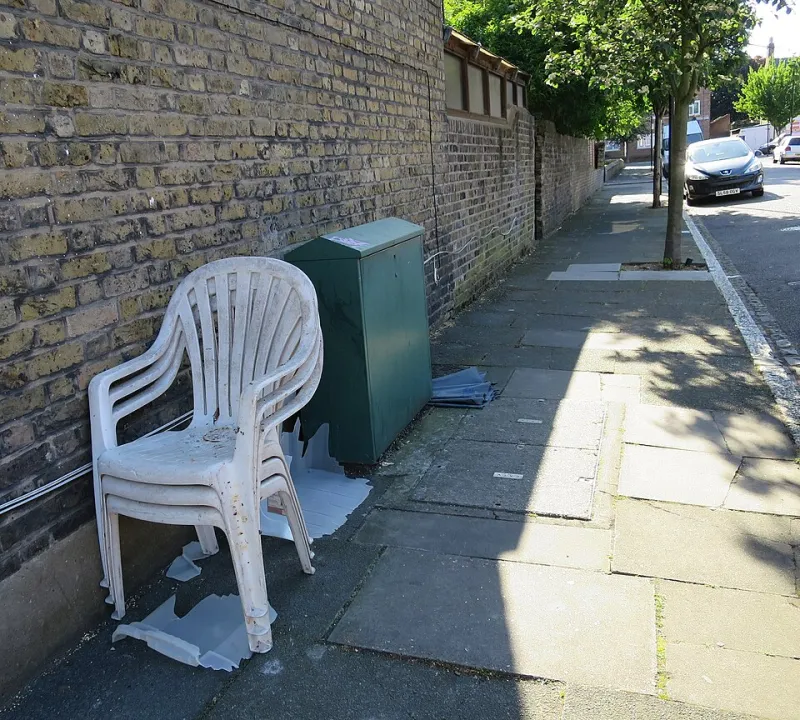
A dining chair wedged under a door handle is the improvisation of someone who is hosting and needs airflow. It is dramatic, visible and slightly unsafe if the door is on a spring. It says: we have guests, the kitchen is hot, and nobody is thinking about the hinge. The chair is not a permanent solution, but it is a memorable one.
The November draught test
We did not conduct a laboratory experiment. We stood in a hallway on a grey November morning, opened the back door, and watched the wind come through. The rubber wedge won on grip. The painted brick won on reliability. The bleach bottle won on story. The dumbbell won on guilt. The chair won on drama.
If you are choosing a doorstop for a windy month, the boring answer is a proper wedge. The British answer is whatever is closest. Both are valid. Neither is a reason to wedge open a fire door, which should never be propped, no matter how good the brick looks.
What your doorstop says about you
A brick suggests continuity: you keep things, you fix things, you have a garden wall with a story. A rubber wedge suggests forward planning, or at least one optimistic trip to a hardware shop. A bleach bottle suggests a household that solves problems at speed. A dumbbell suggests a fitness phase, fossilised. A paint tin suggests a project on pause. A tennis ball suggests a dog. A kettlebell suggests overcompensation. A chair suggests company.
None of this is a judgment. It is just a small autobiography by the door. In November, when the wind finds every gap, the doorstop is the thing that says: this house is doing its best. The brick stays. The bleach bottle waits. And somewhere under the radiator, a yellow wedge is gathering dust until spring.