Spoon Fed Up: The Great British Teaspoon Disappearance, Investigated
It is a truth universally acknowledged that a British kitchen in possession of a good teaspoon must be in want of several more. You buy a set of six. Within a fortnight, four have gone. Not broken, not lost down the back of the radiator — simply gone. And yet the drawer still closes, as if nothing happened.
Here at UshVP, we take domestic oddities seriously enough to write them down but not so seriously that we forget to put the kettle on. So this November, as the nights draw in and hot drinks become a personality trait, we have decided to investigate the teaspoon black hole. Not the cosmic kind. The cutlery kind.
The Crime Scene: A Drawer With a Gap
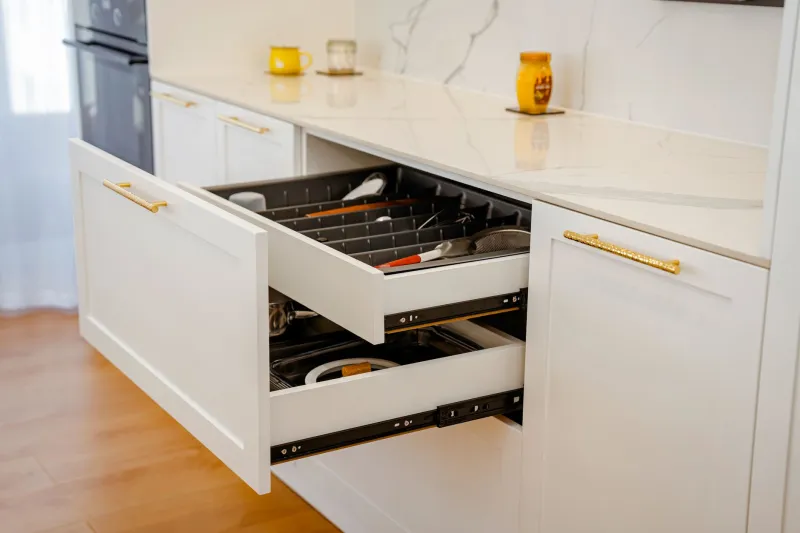
The evidence is always the same. A cutlery drawer, neatly arranged, with one conspicuous empty slot where a teaspoon should be. Sometimes two. Occasionally the entire teaspoon section has been reduced to a single bent specimen with a faded logo from a hotel that closed in 2011.
What makes this mystery so reliable is its universality. A reader in Leeds tells us she bought a dozen matching teaspoons in January. By October, she could account for three. One was in the bathroom, for reasons nobody could explain. Another was found in a coat pocket. The third had been repurposed as a plant label. The other nine had simply evaporated.
A shared house in Bristol has gone further. They now operate a informal spoon rota, with a whiteboard by the kettle listing who has borrowed which spoon and when it is due back. It is not working. The whiteboard itself has become a source of passive-aggressive artwork.
And in a Cardiff office canteen, a facilities manager confirmed that forty teaspoons were purchased in January. By the end of September, three remained. One of those was a dessert spoon standing in for a teaspoon, which everyone agreed was not the same thing at all.
A Field Guide to Teaspoon Migration
After consulting readers, colleagues and one retired cutlery salesman, we have identified several distinct patterns of teaspoon movement. Think of this as a naturalist’s guide, but for the thing you stir your tea with.
The Canteen Drifter
Moves between the office kitchen and individual desks. Often found beside a mug of cold coffee, wearing a thin film of milk. It has no loyalty to the drawer and will migrate home in a lunchbox if given half a chance.
The Shared-House Phantom
Travels between bedrooms under cover of darkness. Identified by the passive-aggressive note that appears on the fridge the following morning. Rarely returns voluntarily. Sometimes reappears when replacements are bought, as if to say it was here all along.
The Drawer-Back Hermit
Lives behind the potato peeler and the thing that might be a bottle opener. Emerges only when you have given up and bought a new set. Its reappearance is a small, quiet victory that lasts approximately four minutes.
The Tea-Break Commuter
Carried in bags, pockets and hands. Occasionally crosses county lines. A reader in Norwich reports finding a teaspoon in her handbag after a work trip to Birmingham. She has no memory of putting it there. She has kept it, just in case.
The Passive-Aggressive Hoarder
Not a spoon itself, but a person. Collects teaspoons in a mug on their desk and refuses to acknowledge the growing pile. When challenged, they say they are ‘just keeping them safe’. They are not.
The Usual Suspects, and Why None of Them Quite Fit
Theories abound. Drawer gremlins. Borrowed spoons that were never returned. The bin. The dishwasher, which has an uncanny ability to swallow small items and return them as a sort of metallic lint. A friend once suggested that teaspoons are actually a liquid, and that they simply flow into the gaps of domestic life. We have not ruled this out.
But the most convincing explanation is also the dullest: teaspoons are small, communal and easy to put down. They travel in pockets, in mugs, in bags. They are borrowed without a second thought. They are not valuable enough to track. And so they slip away, one stir at a time.
It is not malice. It is not magic. It is just the quiet chaos of sharing a kitchen with other people. Which, in November 2026, feels like a decent metaphor for quite a lot of things.
How to Keep a Decent Spoon Within Reach
We are not here to solve the mystery. We are here to help you get through soup season with at least one functional teaspoon to your name. Here are a few genuinely useful tips.
Buy a distinctive set
Matching, cheap, anonymous teaspoons vanish without trace. A set with a coloured handle, an odd pattern or a slightly ridiculous shape is easier to spot and harder to accidentally pocket. It also makes a quiet statement: this spoon belongs to someone.
Create a spoon parking bay
Put a small mug or dish next to the kettle and make it the official home for teaspoons. It sounds daft, but a designated parking bay reduces the number of spoons left on counters, windowsills and the edge of the sink. It also gives you a fighting chance of finding one when you need it.
Do a weekly audit, not a witch hunt
Once a week, gather every teaspoon in the house and return it to the drawer. Check mugs before they go in the dishwasher. Check coat pockets. Check the bathroom, because you never know. Do not interrogate anyone. Just collect.
Agree a spoon amnesty
In shared houses, introduce a no-questions-asked spoon amnesty. Anyone can return a spoon to the drawer without fear of judgement. This works better than a rota, a whiteboard or a group chat that descends into chaos by Wednesday.
Keep one at work and one in your bag
If you commute, consider a small personal teaspoon that lives in your bag. It is not antisocial. It is self-defence. A decent teaspoon at your desk means you are less likely to raid the office kitchen and more likely to return what you borrow.
Don’t buy the flimsiest set
Cheap teaspoons bend. Bent teaspoons get binned. Binned teaspoons get replaced. And the cycle continues. Spend a little more on a set that feels solid in the hand. You do not need heirloom silver. You just need something that will not fold under the pressure of a vigorous stir.
The Verdict: A Mystery Worth Keeping
The teaspoon black hole may never be fully explained. But perhaps that is the point. A teaspoon is a small, ordinary, shared object. Its disappearance is the price of living alongside other humans, with their mugs and their pockets and their mysterious desk drawers.
So this November, as you stir your tea and stare into the drawer at the one remaining spoon, take a moment. You are part of a great British tradition. You are also probably going to buy another set before Christmas. Keep one within reach. Forgive the rest.