Behind the Bin, With Barry: Britain’s Missed-Parcel Note Decoded
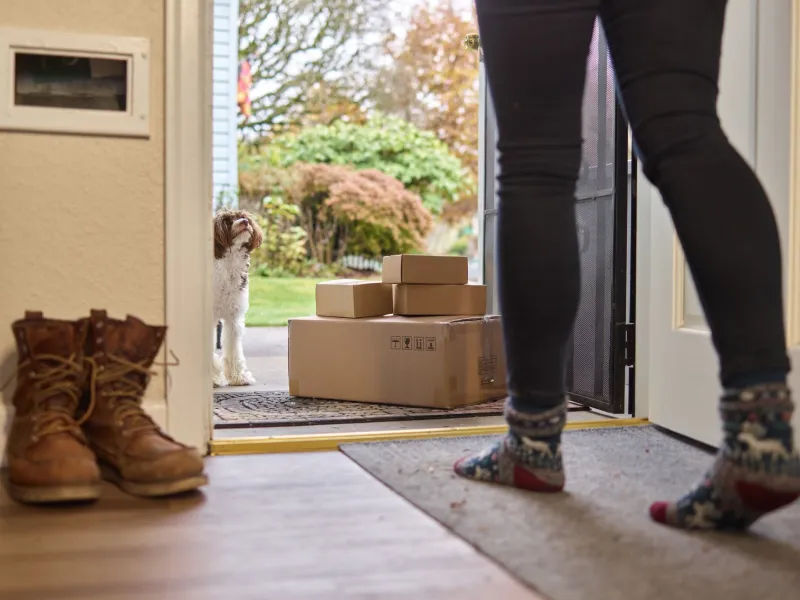
Somewhere in Britain this week, a courier will knock once, wait approximately four seconds, and post a card through your door bearing the words ‘left in safe place’. The safe place, according to the card, is ‘behind bin’. Which bin? Whose bin? Is the parcel now technically rubbish? These are the questions that define the late-November parcel season, when the nation’s front gardens become a patchwork of cardboard, hope and slightly damp mystery.
The card is a small confession
A missed-delivery note is not really a note. It is a confession, a worksheet and a treasure map folded into one flimsy rectangle. On one side you get the apology, the depot address and a barcode that never scans. On the other, a human being has tried to summarise your entire property in six words: ‘In porch. Dog friendly. Thanks.’
This is where the secret geography begins. The card does not describe your house as you know it. It describes your house as a courier sees it at 2.17pm on a wet Tuesday: a gate, a bin, a possible porch, a neighbour who may or may not be in, and a small window of opportunity before the next stop. The note is a snapshot of trust, written at speed and often in a handwriting that suggests the pen was attached to a moving van.
Behind the bin: the national default
The wheelie bin is Britain’s unofficial parcel locker. It is free, it is familiar, and it is almost always the wrong shape for the job. A parcel placed ‘behind bin’ implies a level of concealment that only works if the thief is polite enough to approach from the front. From the pavement, it looks like nothing. From the side, it looks like a box with your name on it. From the bin’s perspective, it is an indignity.
There are regional variations. In some streets, ‘behind bin’ means the green bin by the side gate. In others, it means the recycling bin that nobody has moved since August. Occasionally it means the bin store, which is less a safe place and more a communal cave of damp cardboard and broken patio furniture. The note rarely specifies. The courier assumes. You interpret. The parcel waits.
Porches, sheds and other tiny fiefdoms
The porch is the aristocrat of safe places. It suggests a certain architectural dignity: a roof, a door, a bit of shelter from the drizzle. ‘In porch’ is the note equivalent of a firm handshake. It says: I have assessed your property and found it acceptable. It also says: I did not want to stand in the rain any longer than necessary.
Sheds are more complicated. A shed is a private fiefdom, often locked, frequently leaning, and sometimes home to a lawnmower with strong opinions. A note saying ‘in shed’ is an act of optimism. A note saying ‘shed code 1984’ is an act of wild trust. A note saying ‘shed open, mind the paint’ is the beginning of a short story you did not ask to read.
Then there are the side gates, the carports, the ‘under the stairs outside’ and the immortal ‘by the plant pot’. Plant pots are the most poetic of safe places. They imply greenery, care and a vague sense that the parcel will be protected by foliage. In November, the plant pot is usually a sodden pot of dead geraniums. The parcel does not mind.
With number 42: hostage diplomacy
The neighbour is the oldest safe place of all. ‘Left with number 42’ is not just a delivery instruction; it is a small diplomatic incident waiting to happen. Number 42 may be delighted to help. Number 42 may be out. Number 42 may have accepted the parcel three weeks ago and placed it in a hallway where it has since become part of the furniture.
The negotiation usually begins with a note through your door: ‘Parcel with us, we’re in after 6.’ It ends with you standing on a doorstep making small talk about the weather while a box is retrieved from behind a coat rack. There is gratitude, mild embarrassment and the unspoken understanding that you now owe number 42 a favour, probably involving a bin or a cat.
This is the secret geography at its most human. The courier has outsourced the final metre of delivery to the street’s informal network. The parcel has become a social object. You are no longer just receiving a package; you are participating in a tiny civic drama with a barcode.
The late-November rush changes the map
By the second week of November, the map is under pressure. Black Friday looms, Christmas shopping has started early, and every courier has more stops than patience. The safe-place note becomes a survival tactic. ‘If no answer, leave in porch’ is no longer a preference; it is a plea. ‘Anywhere safe’ is not a location; it is a mood.
This is when the notes get stranger. ‘Behind the blue thing’ is not helpful. ‘In the usual place’ assumes a shared history that may not exist. ‘With Barry’ is either a neighbour, a dog or a local landmark. The card goes through the door and you are left to decode it like a cryptic crossword clue written by someone who has already driven away.
How to write a safe-place note that works
If you are leaving instructions for a courier, be specific. ‘Behind the green bin on the left of the gate’ is useful. ‘Safe place’ is a riddle. ‘Porch’ is fine if you have a porch. ‘Shed’ is fine if the shed is unlocked and not currently harbouring a wasp nest. ‘Neighbour at 42’ is fine if you have warned number 42, ideally in person and not via a note that they will find after the parcel has been left.
The best notes are boring. They name a place, a landmark and a condition. They do not rely on the courier’s intuition. They do not use the word ‘usual’ unless the courier has been to your house before. They do not say ‘behind bin’ when there are three bins and one of them is on wheels.
A geography of trust, in biro
The missed-parcel note is a small, scruffy document of modern British life. It reveals how we divide our streets into zones of trust: the porch is safe, the bin is safer, the neighbour is a gamble, the shed is a secret. It also reveals how much we ask of strangers in a high-vis jacket during the wettest, busiest month of the year.
So next time a card lands on the mat, read it properly. It is not just a failed delivery. It is a map of your street, drawn by someone in a hurry, with a parcel-shaped hole in the middle. And somewhere behind a bin, with any luck, your late-November order is waiting.