The Invisible Rope: A Field Guide to Britain’s Silent Queue Code
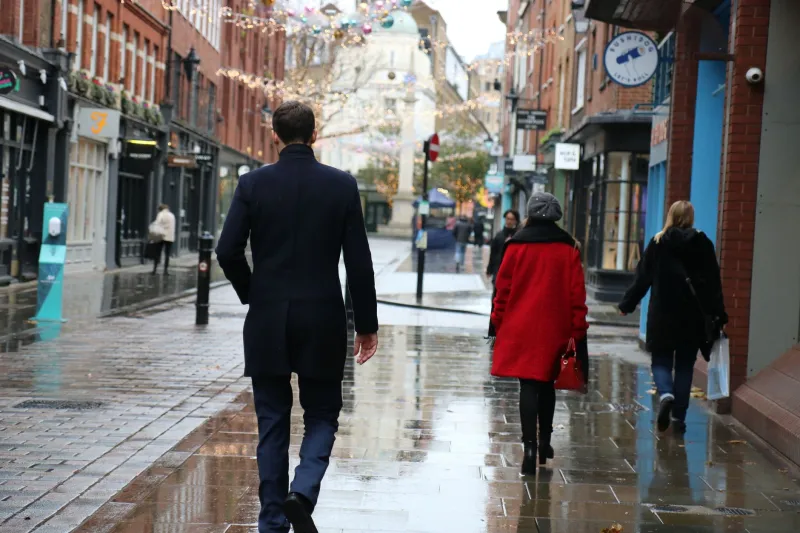
There is no sign at the bus stop saying where the queue begins. Nobody has painted a line outside the post office. The chippy does not issue numbered tickets, and the self-checkout area at the supermarket has all the spatial logic of a dropped box of matches. Yet somehow, most of the time, it works. Britain’s queue is an invisible rope stretched between strangers, and everyone is expected to know how to hold it.
At UshVP we have long suspected that the queue is not simply a way of waiting. It is a small piece of civic theatre, performed daily, with a cast of mildly aggrieved strangers and a script nobody has ever written down. The 2026 Christmas queue season is about to test all of us. So here is a field guide to the silent code — the spacing, the sighs, the bag placement, and the sacred exchange that keeps polite chaos from becoming actual chaos.
The bus stop shuffle
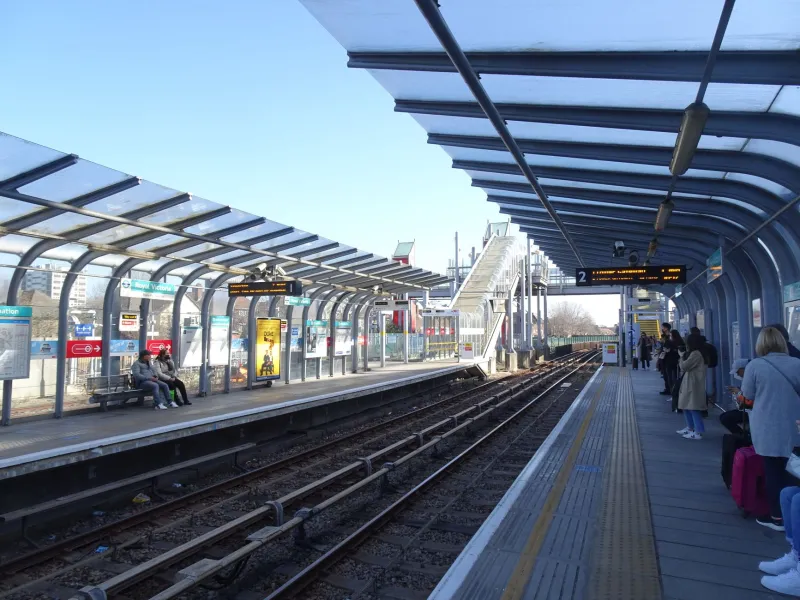
The bus stop queue is less a line than a slow-motion negotiation. New arrivals do not march to the back. They perform a subtle orbital manoeuvre, drifting towards the shelter, checking the timetable they have already checked, and then settling into a position that says: I am here, but I am not making a fuss about it.
The key is plausible deniability. Stand too close to the person at the front and you look eager. Stand too far away and you might be accused of not queueing at all, which is worse. The correct distance is roughly one shopping bag plus a vague sense of doubt. When the bus appears, everyone shuffles forward with the quiet urgency of people who have been waiting for eleven minutes and would like it noted.
The post office sigh
The post office queue has its own acoustic signature. It begins with a low sigh, usually from someone holding a parcel that is heavier than expected. The sigh is not aimed at any individual. It is a general broadcast: I am still here, the queue is still moving, and the situation remains just about tolerable.
There is also the paperwork rustle, the passport-photo check, and the person who announces to nobody in particular that they only came in for a stamp. These are not complaints. They are queue punctuation. They fill the gaps between one customer finishing and the next being summoned, and they reassure everyone that the line is still a line, not a loose gathering of the confused.
The self-checkout hover
The self-checkout hover is Britain’s most advanced form of queueing because it happens without a queue. A row of machines blinks at the front of the store. A crowd of shoppers stands behind an invisible boundary, each one calculating which till will free up first. Nobody wants to commit too early. Nobody wants to be the person who joins the wrong line and ends up behind someone whose avocado will not scan.
The hover requires peripheral vision and a calm face. You must look as if you are browsing the reduced section rather than monitoring till four with the intensity of an air-traffic controller. When a machine turns green, there is a brief collective twitch. The chosen shopper steps forward. The rest readjust their bags and pretend they were not watching.
The chippy-night stand-off
Friday night at the chip shop is the queue at its most emotional. The air is salty, the lighting is fluorescent, and everyone is hungry enough to become briefly unreasonable. The stand-off happens when the shop is small and the door keeps opening. New customers enter, assess the room, and must work out whether the person leaning against the wall is waiting, ordering, or simply sheltering from the rain.
This is where the sacred question comes in. ‘Are you in the queue?’ It is a small sentence with enormous social power. Asked politely, it prevents confusion. Asked too loudly, it can sound like an accusation. The correct delivery is apologetic, as if you are the one causing trouble by existing near a counter.
Bag placement and the geography of hope
A bag on the floor is not just a bag. It is a marker, a boundary and a statement of intent. Placed beside a shoe, it says: I am here, I am settled, and I would like my place acknowledged. Placed on the counter, it says: I am nearly there. Placed on a chair in a café, it says: this table is mine, please do not sit on my sandwich.
The British queue is full of these small territorial signals. A coat draped over a trolley handle. A basket parked at a respectful angle. A rolled-up umbrella used as a temporary fence. None of it is official, and all of it is understood. We are a nation that would rather invent a whole system of improvised markers than say, directly and calmly, ‘I was next.’
The sacred exchange
Every queue depends on one tiny act of trust: the moment someone asks whether you are waiting, and you tell them the truth. This exchange is almost always polite. ‘Yes, but I think there’s someone before me.’ ‘No, go ahead, I’m just hovering.’ ‘I’m not sure, to be honest — is this the queue for the counter or the parcel collection?’
These sentences do a lot of work. They distribute responsibility. They admit uncertainty. They keep the invisible rope from snapping. In a country where directness can feel like a confrontation, the queue question is a way of being honest without being rude. It is also, quietly, a form of community. For two minutes, you and a stranger have agreed on the same small truth: this is the line, and we are in it.
Surviving the 2026 Christmas queue season
The Christmas queue is the ordinary queue with tinsel on. Shops are busier, pavements are narrower, and everyone is carrying at least one item that is more awkward than it needs to be. The 2026 seasonal scrum will bring the usual tests: the gift-return queue in January, the supermarket till queue in December, the ‘just popping in’ queue that turns out to be forty minutes deep.
The rules do not change, but the stakes rise. Keep your distance. Keep your bag close. Do not sigh aggressively at the person in front; sigh generally, into the middle distance. If you must leave the queue to fetch something, make eye contact with the person behind and explain. They will either nod or silently judge you, and both outcomes are acceptable.
Most importantly, remember that the queue is not the enemy. The queue is the message. It says that we have agreed to wait our turn, even when we would rather not, and that we are prepared to do it with a reasonable amount of grumbling and a minimum of actual chaos. That may not be glamorous, but it is remarkably British. And somewhere between the bus stop shuffle and the post office sigh, it is still working.